API Integration API integration services
Every business ends up with a store, a CRM, a payment provider, a courier and an accounting tool that do not talk to each other. Someone fills the gap by hand. We connect them through their APIs so the data moves on its own.
For operations and finance teams selling in more than one market, with more tools than people to keep them in step.
CREATVZ is an API integration company for businesses anywhere, working remotely. We connect your store, CRM, payment provider, courier and accounting tool through their APIs so data moves on its own instead of by hand. Send a list of the tools you use through the project form or WhatsApp.
Your team has become the integration.
When systems do not connect, people connect them: exporting a sheet, re-typing an order, checking stock in two places. It works until volume grows, someone is on leave, or a typo ships the wrong item. The cost hides in wages and in mistakes nobody traces back.
Integration is less about code than about decisions: which system holds the truth for prices, who wins when two records disagree, and what happens when a provider is down. We write those decisions down first, then build connectors that follow them and tell you when they fail.
Connections businesses ask for
- Online store to accounting
- Store or website to CRM
- Orders to courier and tracking
- Payments to invoices
- Forms and leads to sales tools
What you get
You get a map of your systems, a written plan for each connection, tested connectors, alerts when something fails, and documentation and access keys held in your own accounts.
Systems Audit
A map of the tools you use today, what data moves between them by hand, and which of them offer an API we can work with.
Integration Plan
A written plan for each connection: what triggers it, which fields move, which system is the source of truth and what happens when something fails.
Connector Build
The connectors built and tested against your real accounts, using each provider’s official API where one exists.
Data Mapping & Sync
Field mapping for customers, orders, products, invoices or stock, with an agreed rule for duplicates, missing values and Arabic and English names.
Error Alerts & Logs
Alerts when a sync fails and a log your team can read, so a missed order is noticed in minutes rather than at month end.
Documentation & Support
Plain documentation of every connection and the keys it uses, held in your accounts, plus a support plan for when a provider changes its API.
API integration for businesses selling in many countries
When a business sells in several countries, its tools multiply, and someone ends up copying data between them.
A business that sells in more than one market usually has more tools than people to keep them in step: a store or website, a payment provider, a courier in each country, accounting, a CRM and a spreadsheet that holds it all together. When systems do not connect, people connect them, by exporting a sheet, re-typing an order or checking stock in two places. It works until volume grows or someone is on leave. We take briefs from companies in many countries and build integrations from studios in Riyadh, Jeddah, Manama, London, Lahore and Karachi.
We start by mapping what moves where, who does it today and what goes wrong. Then we build only the connections that remove real manual work, test them with sample orders and write down how they behave when something fails. Integration work is naturally remote. We hold calls to agree the flow, work with test accounts, and hand over documentation so you or another developer can maintain it. Keys and access stay with you.
Different markets bring different tools. One country may use a particular courier and payment provider, another a different accounting package, and the names and addresses may be in more than one script. We plan for that: Arabic and English text carried through correctly, and each market’s tools connected to the same flow. Send us a list of the systems you use, the work your team repeats by hand, and the countries involved, and we will say what we would connect first.
How multi-market businesses use API integration
Orders re-typed for each country
A store sells in two countries and staff copy orders into different courier systems. An integration sends each order to the right courier automatically.
Accounting that lags behind sales
Sales are entered into accounting by hand at month end. An integration passes invoices and payments across as they happen.
Leads that never reach the right person
Forms on the website for each market land in different inboxes. An integration routes each lead into one CRM with its market tagged.
Staff re-typing orders from one system into another?
List the systems and what moves between them. We reply with questions and a scoped quote.
How it works
Step 1: Audit
We list your systems, watch where staff re-type data, and check what each system’s API allows.
Step 2: Plan
Each connection written down: trigger, fields, source of truth, error handling. You approve before we build.
Step 3: Build
Connectors built and tested on a copy or test account first, then switched on with real data under watch.
Step 4: Hand over
Documentation, access keys in your name, alerts set up, and a support plan for provider changes.
Development work
See all work
High Star Est. website and brand
Website, branding, logo and company profile for High Star Est., an operation and maintenance contractor in Yanbu, Saudi Arabia.

Mobius bilingual brand and website
Bilingual Arabic and English logo, brand identity, company profile and website for Mobius Technology Company Limited, an industrial services company in Saudi Arabia.
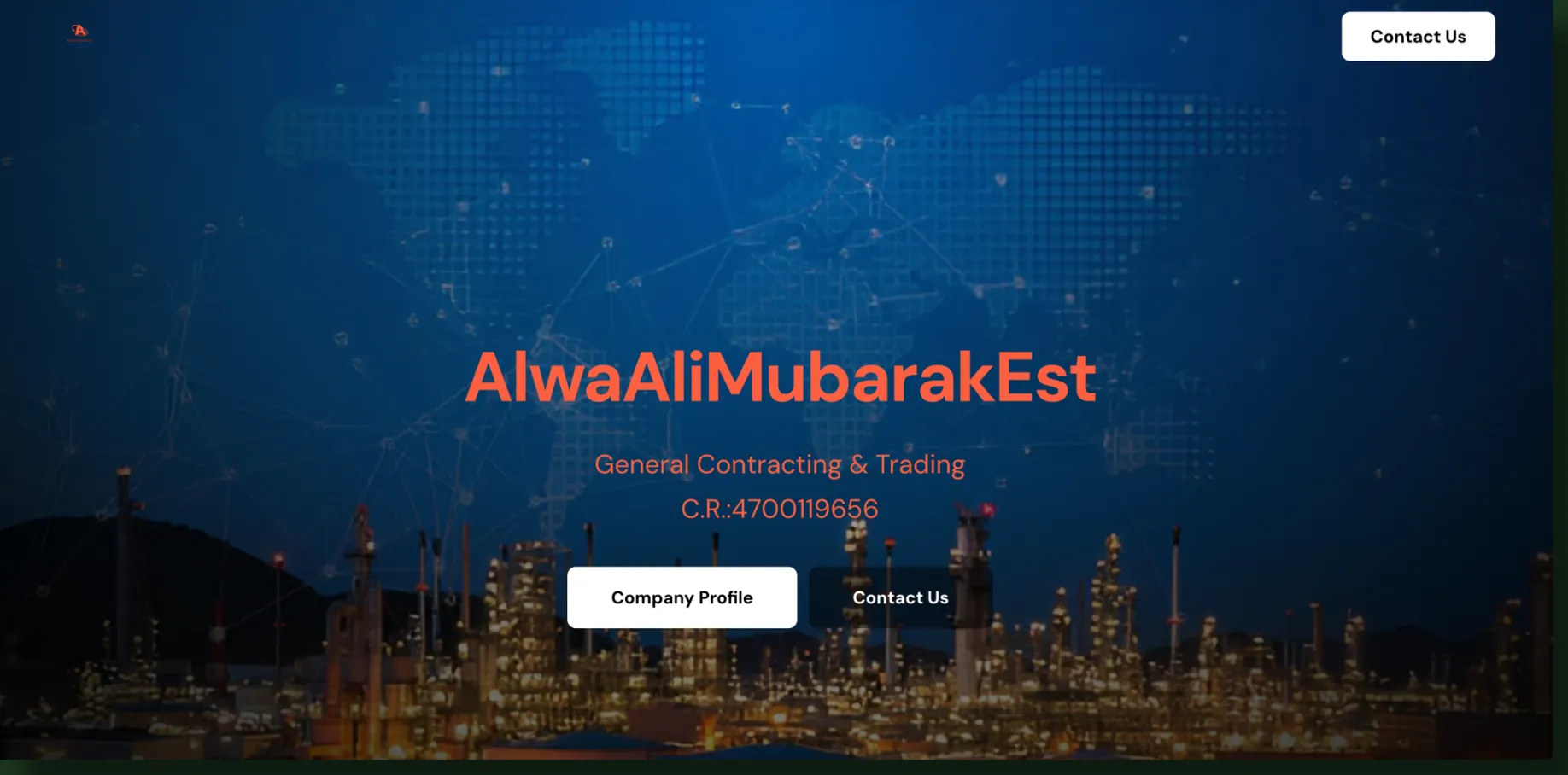
Alwa Ali Mubarak Est. website
Website, domain and hosting setup, and company profile for a general contracting and trading establishment in Saudi Arabia.

Orbit Conveyancing website
Website, branding and Google Business Profile setup for Orbit Conveyancing, a property conveyancing firm in Melbourne, Australia.
Project or retainer?
Questions
How much does an API integration cost?
It depends on the scope: how many systems, how many data types move between them, how often, and how good each provider’s API is. We audit first and then quote a fixed scope per connection.
How long does it take?
A single connection between two well-documented systems is much quicker than a chain of several. The proposal lists each connection with its own date.
Why not use a no-code automation tool?
Sometimes that is the right answer and we will say so. Custom connectors make sense when volume is high, the logic is specific, or you need proper error handling and logs.
What if one of our systems has no API?
We look for a reliable export, a webhook or a supported file exchange. If none exists, we tell you before you pay for anything, rather than building something fragile.
What happens when a provider changes its API?
Providers do change them. Alerts tell us when a connection breaks, and a support plan covers updating it. Without one, we fix it at an agreed rate.
Who owns the integration?
You do. The code, the hosting and the access keys are in your accounts, and the documentation explains each connection in plain language.
Is our data safe while it moves?
We use each provider’s secure methods, keep keys out of the code, and give each connector only the access it needs. Your data protection duties should be confirmed with your adviser.
Can you move our old data across as well?
Yes, as a separate one-time import when it is in scope, with a check of the results before the old data is switched off.
Do you build the systems themselves too?
Yes. When an integration shows that a process needs its own system, see the web application development page for that scope.
Can you connect systems used in different countries?
Yes, if the tools offer a way to connect. We check each tool’s documentation before agreeing scope.
How do you test an integration across markets?
We use test accounts and sample orders for each market, and write down what we tested and what we did not.
Who keeps the credentials?
You do. We use limited access for the work and set up keys under your accounts wherever possible.
Which studio would build the integration?
We work from Riyadh, Jeddah, Manama, London, Lahore and Karachi. We choose the developer around your tools and markets.
Can another developer take over later?
Yes. We document what is connected, how data moves and how to restart it, so another developer can continue.
What should we send first?
The list of tools, a description of the manual steps, the countries and volumes involved, and anyone who has access to the accounts.
Tell us which systems need to talk.
A short list is enough to start: the systems you use, the data you move by hand and how often. We reply with questions and a fixed-scope quote.
More specialist services
Each one stands alone, and they work together on a single brief.
- DevelopmentAll Development services
- E-commerce Store DesignSalla, Zid, Shopify, WooCommerce / Arabic + English / Launch-ready
- Web Application DevelopmentPortals + dashboards / Arabic RTL / Your code
- Real Estate Portals & AppsListings + search / Arabic RTL / Your code
- Website Speed OptimizationCore Web Vitals / Mobile first / Before + after
- Mobile App DevelopmentiOS + Android / Arabic RTL / Store submission
Got a brief?
Tell us what you are making and when it has to ship. We will take it from there.